RCS and the Slow Death of SMS
The text message is finally being replaced. What RCS fixes, and what it doesn't.
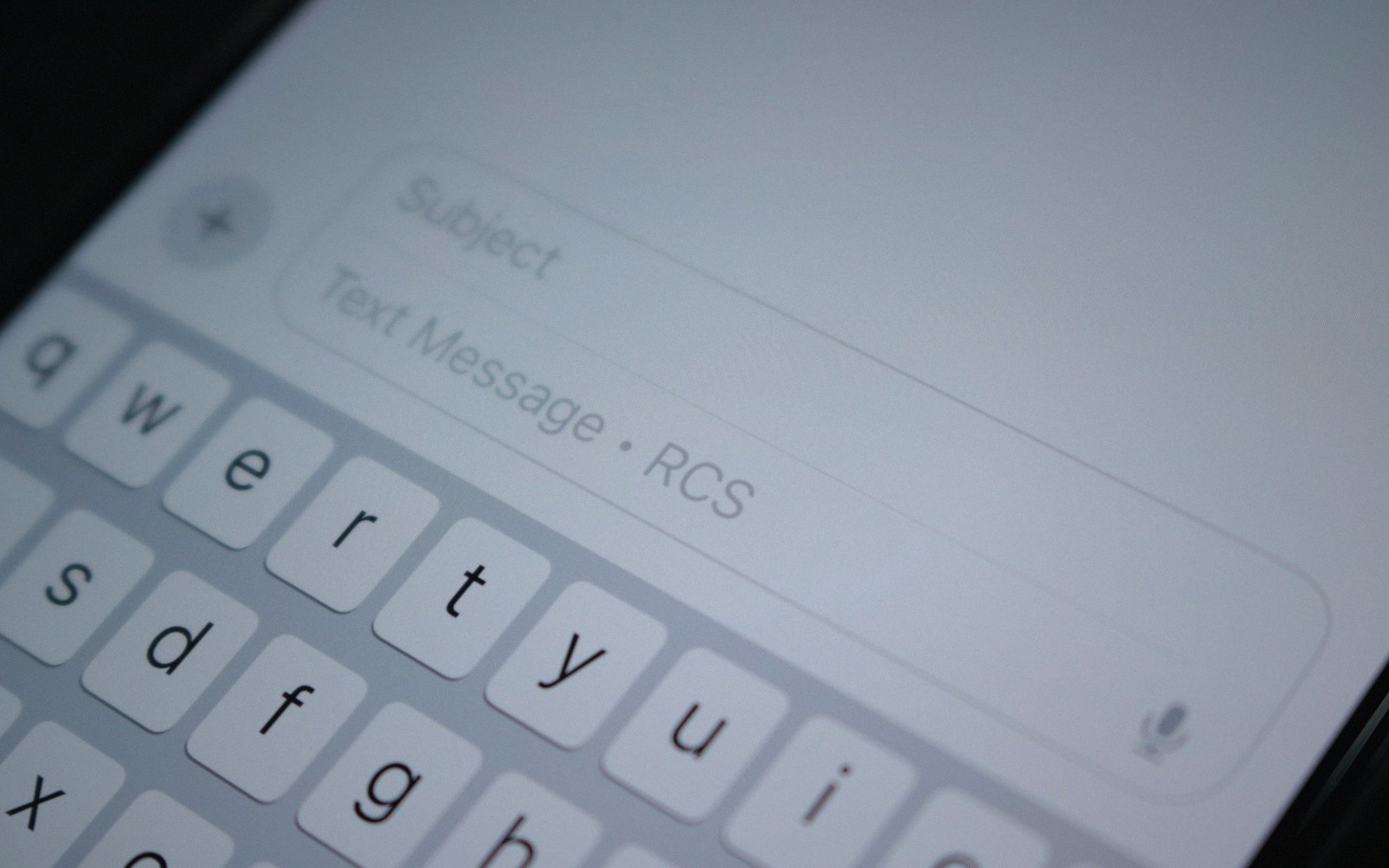
01 What SMS got wrong, and why it lasted so long
The short message service turns forty this decade, and for most of its life it hasn't changed at all. SMS was standardised in the late 1980s as a byproduct of GSM signalling channels — a way to squeeze 160 characters of Latin text through the gaps in a voice network. It was never meant to be a platform. It became one anyway, and then it became the platform: the one fallback that every phone on every carrier could reach, the reason two strangers could always coordinate without agreeing on an app first.
That universality bought SMS an extraordinarily long life. Billions of messages still travel over it every day, mostly as one-time passcodes and delivery notifications — the digital equivalent of a telegram. But for actual human conversation, SMS aged badly. There are no read receipts across networks. There is no typing indicator. Group messages arrive as MMS, a patchwork standard that still somehow manages to mangle photos before delivering them. And none of it is encrypted in transit — messages pass through carrier infrastructure in plain sight.
Developers and users worked around these limitations for years. iMessage papered over them for iPhone-to-iPhone conversations; WhatsApp and Signal solved them properly, by abandoning the carrier layer entirely. The result was exactly the situation the carriers feared: messaging moved off their networks, and SMS became infrastructure for notifications rather than conversation.
02 What RCS actually is
Rich Communication Services is the industry's attempt to upgrade SMS from within the carrier system. The standard has existed in some form since the late 2000s, developed under the auspices of the GSMA, the trade body that governs mobile standards. For years it went nowhere, implemented inconsistently if at all, because no single manufacturer or carrier had the leverage to make it universal.
Google changed that calculus. Starting in the late 2010s, Google pushed RCS aggressively through its Messages app on Android, eventually building out its own fallback infrastructure so that RCS could work between Android users even without explicit carrier support. The result, marketed as "Chat features," quietly rolled out to hundreds of millions of Android users and gave them something that looked, at last, like a modern chat app: read receipts, typing indicators, high-resolution photo sharing, reactions, and group chats that don't rely on MMS.
Apple was the last major holdout. For years, iPhones showed Android users those notorious green bubbles and delivered them compressed garbage instead of proper video. In 2023, Apple announced RCS support for iOS, and by 2024 it had shipped. The logic was partly regulatory pressure — the European Commission had been scrutinising iMessage's walled-garden advantages — and partly the slow recognition that stubbornness was no longer serving anyone. With both major mobile platforms on board, RCS finally has the universality that made SMS so durable.
The concrete improvements are real. Messages between an Android phone and an iPhone are no longer automatically degraded. Group chats work properly. Photos arrive at the resolution they were sent. Typing indicators and read receipts cross the platform boundary. For everyday conversation, the experience is meaningfully better than SMS.
Messages between an Android phone and an iPhone are no longer automatically degraded.
03 What RCS doesn't fix
Here is where it gets complicated. RCS is a carrier-layer protocol, which means messages still pass through the carrier's infrastructure. End-to-end encryption has been added — Google implements it for Android-to-Android Messages conversations — but it is not part of the GSMA's baseline RCS specification, and it does not currently apply universally to cross-platform conversations. When an iPhone and an Android device exchange RCS messages, the encryption situation varies by implementation and is, at the time of writing, still being worked through. The carriers sit in the middle in ways that apps like Signal do not permit.
There is also the metadata question. Even where message content is encrypted, RCS traffic moves through carrier networks that know who you are, who you contacted, and when. That's not a hypothetical concern — it's the same data carriers have always collected, now applied to a richer conversation layer. The upgrade in user experience does not represent an upgrade in privacy.
And then there is fragmentation. RCS works well when Google's Messages app is used on Android. Other Android clients may handle it differently. Apple's implementation is real but deliberately minimal — no deep integration with iMessage features, no indication that Apple views RCS as anything more than a concession. The green bubble problem has softened, not disappeared; Apple still clearly marks cross-platform RCS conversations as distinct from the blue-bubble iMessage experience.
These notes are part of an ongoing field guide — corrections and additions are welcome at the desk.
04 The text is not quite dead
What RCS represents, honestly, is SMS with the rough edges filed down — good enough to stop the embarrassment of photo-sharing between iPhone and Android users, not ambitious enough to challenge Signal or even WhatsApp on privacy grounds. It will inherit SMS's role as the universal fallback, the thing that works between two people who share no apps in common. It will replace SMS for most everyday cross-platform messaging. And it will do none of the things that actually matter to people who have thought carefully about whether their chat is really private.
The death of SMS is real, and it is overdue. The heir to the throne is tidier, more capable, and still fundamentally a carrier product — trustworthy enough for coordinating dinner, not for anything you'd mind a carrier logging.
◆ A short timeline
- Late 1980sSMS standardised within GSM
- Late 2000sRCS standard first developed under GSMA
- Late 2010sGoogle begins pushing RCS via Android Messages app
- 2023Apple announces iOS RCS support
- 2024Apple ships RCS support in iOS
◆ People & organisations
GSMA
Referenced in this piece
trade body governing global mobile standards, including GSM and RCS
Google Messages
Referenced in this piece
Google's Android messaging app; primary driver of RCS adoption